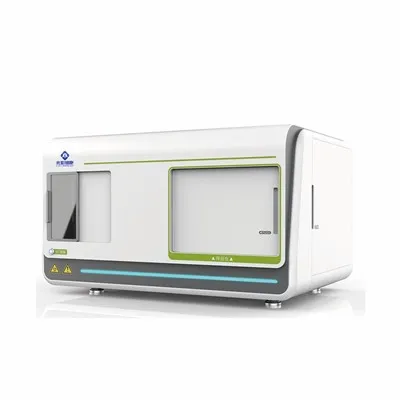
Problems In Maintaining Cell Viability In Live Cell Imaging System During Imaging
Leave a message
Live-cell imaging is an important analytical tool in laboratories studying biomedical research disciplines, such as cell biology, neurobiology, pharmacology, and developmental biology. Imaging of fixed cells and tissues (for which photobleaching is the major issue) usually requires a high illumination intensity and long exposure time; however, these must be avoided when imaging living cells. Live-cell microscopy usually involves a compromise between obtaining image quality and maintaining healthy cells. Therefore, to avoid a high illumination intensity and long exposure time, spatial and temporal resolutions are often limited in an experiment. Imaging live cells involves a wide range of contrast-enhanced imaging methods for optical microscopy. Most investigations use one of the many types of fluorescence microscopy, and this is often combined with transmitted light techniques, which will be discussed below. Continual advances in imaging techniques and design of fluorescent probes improve the power of this approach, ensuring that live-cell imaging will continue to be an important tool in biology.
An important caution is to ensure that cells are in good condition and function normally while on the microscope stage with illumination in the presence of synthetic fluorophores or fluorescent proteins. The conditions under which cells are maintained on the microscope stage, although widely variable, often dictate the success or failure of an experiment.
Various cell culture media are available based on the particular biochemical requirements of cells. Culture media contain various constituents, including amino acids, vitamins, inorganic salts (minerals), trace elements, nucleic acid constituents (bases and nucleosides), sugars, tricarboxylic acid cycle intermediates, lipids, and co-enzymes. In tissue culture media, an important step is to control oxygen concentration, pH, buffering capacity, osmolarity, viscosity, and surface tension. Commercially available media formulations often include an indicator dye (e.g., phenol red) to visually determine the approximate pH value. A carbon dioxide and bicarbonate buffer system for regulating pH is needed for almost all cell lines. The cells need to be cultured in an atmosphere that contains a small amount of carbon dioxide (usually 5–7%) in incubators to control the dissolved gas concentration. For live-cell imaging, an appropriate atmosphere with carbon dioxide can be difficult to provide, and this usually requires specifically designed culture chambers for a regulated atmosphere. Oxygen requirements can vary among cell lines, but normal atmospheric oxygen tension levels are suitable for most cultures. With regard to osmolarity, most of the cell lines have a large tolerance for osmotic pressure, with good growth at osmolarities between 260 and 320 milliosmolar. When cells are grown in open-plate cultures or Petri dishes, hypotonic medium can be used to cope with evaporation.